

Engineering Marine Foam Block Specs for Harsh Climates
Modern maritime engineering demands materials that survive relentless environmental cycles. High-performance vessels and offshore structures endure extreme thermal shifts and constant hydrostatic pressure, which destroy standard substrates. Professionals no longer view marine-grade polyurethane as just a simple buoyant filler; instead, they treat it as a critical structural component that ensures vessel longevity. Because extreme climates accelerate the degradation of inferior materials, engineers prioritize substrates that offer predictable mechanical properties and environmental resistance. This shift in material philosophy places specialized marine foam at the center of modern naval architecture.
General Plastics addresses these rigorous demands with the LAST-A-FOAM® TR-Marine series, setting a new engineering benchmark for marine foam. This high-performance series offers a stable and reliable alternative to traditional materials that often fail under the stress of saltwater and extreme temperatures. By choosing a material specifically formulated for the maritime sector, designers ensure their hulls, decks, and sub-assemblies maintain structural integrity over decades of service. The TR-Marine series provides the consistent density and durability required for the most challenging open-sea missions.
Why Closed Cell Marine Foam Blocks Succeed
A material’s success in deep-water or splash-zone environments depends entirely on its cellular architecture. Closed-cell marine foam blocks feature a non-porous structure that effectively prevents water absorption, even if the outer skin sustains damage. This zero-permeability is vital for maintaining constant buoyancy and preventing weight gain in subsea foam applications. Unlike open-cell alternatives, these rigid blocks retain their shape and lift capacity under significant hydrostatic loads, providing a reliable safety margin for offshore equipment and underwater vehicles.
Manufacturing efficiency also benefits from the specialized chemistry found in this marine foam. TR-Marine is specifically formulated to meet the high standards of composite boat builders, offering superior adhesion with epoxy and polyester resins. Because the material contains no mold-release agents, it eliminates the risk of delamination that plagues other core materials. When compared to traditional wood or PVC cores, closed-cell marine foam sheets offer a clear advantage by resisting rot, decay, and biological degradation. This inorganic nature ensures that the core remains pristine, preventing the hidden structural failures often found in aging maritime assets.
Material Specifications for Extreme Marine Environments
Engineers utilize the correlation between high-density marine foam and compressive strength to optimize structural designs. Using standards like ASTM D-1621, designers can calculate exact load-bearing capacities for structural decks and heavy-duty mounting pads. Higher density variants provide the rigidity necessary to support heavy deck hardware without crushing or deforming over time.
1. Marine Flotation Foam Blocks for Stability
Stability in harsh climates involves more than just staying afloat; it requires managing cold-chain logistics and thermal insulation. Marine flotation foam blocks serve a dual purpose in vessels by providing necessary buoyancy while insulating freezer compartments and fish boxes. The closed-cell structure ensures that these insulated areas remain dry and efficient, even when exposed to high-pressure washdowns or constant humidity. By maintaining zero-permeability, these blocks prevent the ice build-up and energy loss associated with waterlogged insulation.
2. Engineering for Subsea Buoyancy
Operating in the deep ocean requires materials that resist the crushing force of the water column. Our subsea buoyancy solutions maintain their volume and lift capacity at significant depths, ensuring that underwater sensors and ROVs remain neutral or positive as required. The engineering focus for subsea foam remains on long-term creep resistance and volume retention. Designers rely on these precise specifications to ensure that equipment deployed for months or years does not lose its buoyancy due to cell collapse or gradual water ingress.
3. Structural Components: Mounting Pads and Steering Mounts
Heavy maritime equipment requires secure attachment points that do not compromise the vessel’s flotation. Specialized flotation foam blocks are engineered to double as high-strength attachment points for steering wheel mountings and heavy machinery. These high-density sections provide the pull-out strength needed for bolts and fasteners while contributing to the overall buoyancy of the hull. This dual-purpose capability allows boat builders to reduce weight by eliminating heavy metal reinforcements in favor of high-strength polyurethane.
Manufacturability of Marine Foam Blocks
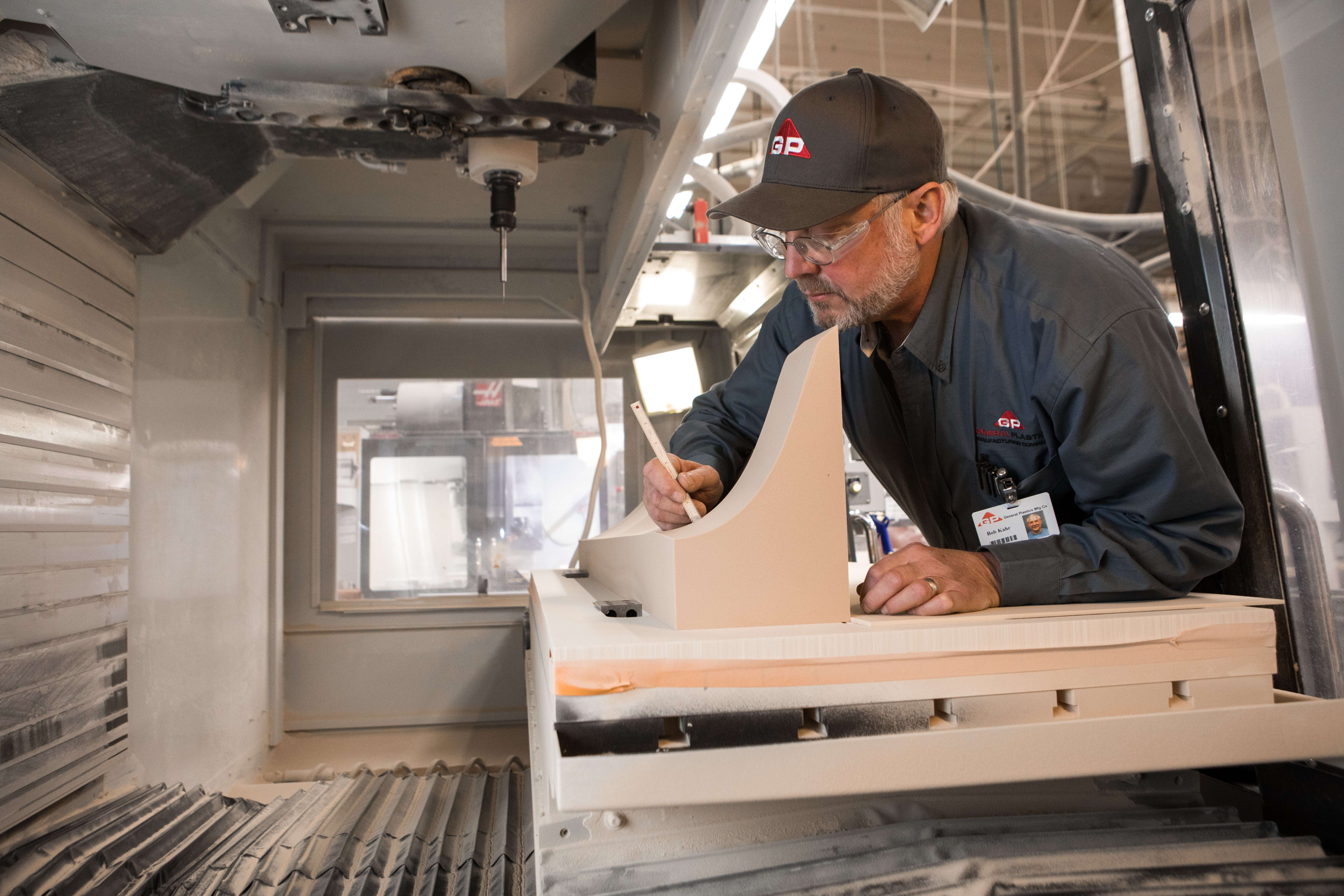
General Plastics offers extensive custom fabrication capabilities to meet unique design requirements. We provide large-scale marine foam blocks that technicians can easily machine into complex geometries using standard CNC tools. This ease of machining allows for the creation of intricate shapes and tight tolerances that are impossible with traditional wood or hand-laid cores. Engineers can design complex hull curvatures or specialized internal components knowing the material will precisely hold the intended shape throughout the fabrication process.
The manufacturing process itself ensures that every block arrives stress-free and dimensionally stable. This stability prevents marine flotation foam blocks from warping, bowing, or twisting during the critical lamination and curing phases. When a core material remains flat and predictable, it ensures a better bond with the outer skins and reduces the labor required for fairing and finishing. By starting with a stable substrate, manufacturers eliminate the internal stresses that can lead to surface telegraphing or structural weakness in the finished part.
Quality Assurance and Regulatory Compliance
Reliability stems from a rigorous commitment to international quality standards. General Plastics maintains certifications for ISO 9001:2015 and AS9100D, ensuring that every batch of marine foam meets exacting performance metrics. We also adhere to Boeing Company D6-82473 standards, reflecting the aerospace-grade precision we bring to the maritime industry. These certifications provide engineers with the confidence that the material properties listed on our data sheets are accurate and repeatable across different production runs.
Environmental responsibility remains a cornerstone of our manufacturing philosophy. We produce all our marine foam products in the United States using processes that are entirely free of CFCs and VOCs. This commitment ensures that your maritime projects meet modern environmental regulations without sacrificing performance. By choosing a sustainable, high-performance material, you protect both your structural assets and the marine ecosystems where they operate.
| Property | TR-Marine (Low Density) | TR-Marine (High Density) | Standard |
| Density | 15 lb/ft³ | 24 lb/ft³ | ASTM D-1622 |
| Water Absorption | < 1% | < 1% | ASTM D-2842 |
| Compressive Strength | High | Exceptional | ASTM D-1621 |
| Chemical Resistance | Excellent | Excellent | GP Method |
Forged for the Open Sea
Long-term survivability in maritime environments depends on the selection of superior closed-cell marine foam blocks. As we have analyzed, the technical specifications of TR-Marine provide a significant advantage in terms of hydrostatic resistance, structural strength, and manufacturing reliability. Whether the application involves a high-speed hull or a deep-sea sensor, the core material serves as the foundation for the entire system’s success. Engineers who prioritize these specs ensure their vessels remain operational in the harshest climates on earth.
Precision engineering requires a partner that understands the nuances of material science and maritime demands. We invite you to explore how our specialized foams can enhance your next project. Reach out to General Plastics today to request a quote or obtain specific technical data for your subsea foam or structural marine requirements.